Questions
50 questions to ask your parents before it is too late
· 9 min read
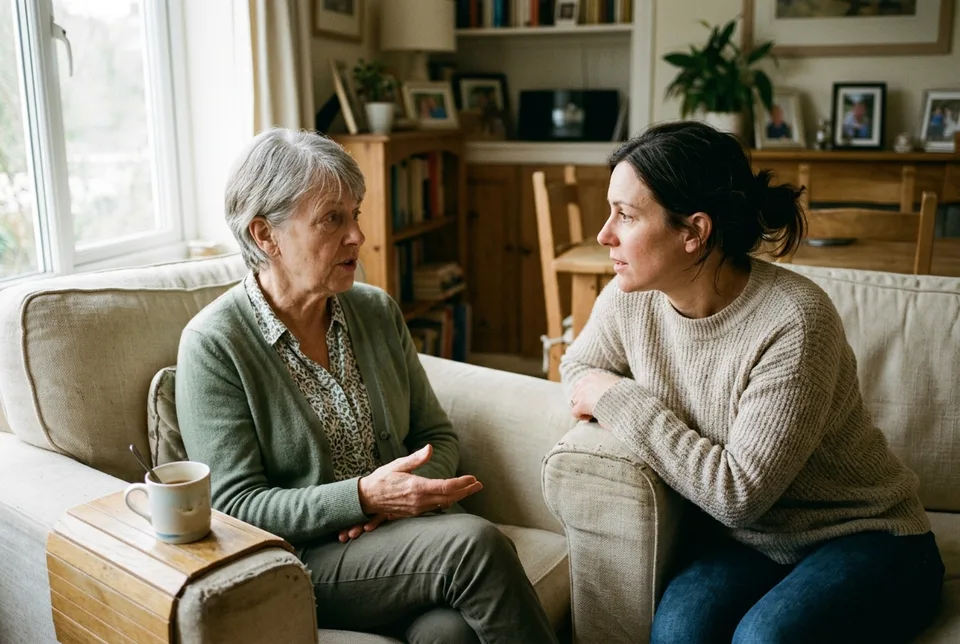
The questions that produce real answers are specific and sensory rather than broad. "What was your childhood like?" gets a sentence; "What did your kitchen smell like on a weekday morning?" gets ten minutes. The fifty questions below are grouped into childhood, family, work, love, belief and turning points, and are written to be asked one at a time rather than worked through in a single sitting.
Childhood and growing up
Start here. Early memory is the most reliably detailed and the least guarded, which makes it the easiest place to begin a conversation that may later reach harder subjects.
- What did the kitchen smell like on an ordinary weekday morning?
- Who did you sit next to in your first year of school?
- What was the first thing you remember buying with your own money?
- Which room in the house was yours, and what was in it?
- What did you do on a Saturday when you were ten?
- Who was the first friend you remember making, and what became of them?
- What were you frightened of as a child?
- What did your parents argue about?
- What was on the walls at home?
- What is the first news event you remember hearing about?
Family and traditions
These questions surface the things a family does without ever explaining, which are usually invisible to the people inside it and fascinating to everyone who comes after.
- What tradition did your family keep that nobody outside it understood?
- Who in the family was considered difficult, and why?
- What did Sunday look like in the house you grew up in?
- Which relative did people compare you to?
- What did your grandparents do for a living?
- What story did your family tell over and over?
- Was there anything the family did not talk about?
- What did you inherit, and where is it now?
Work and money
Working life takes up more waking hours than anything else and is almost always under-recorded in family histories. These questions tend to produce the most surprising material for children and grandchildren.
- What did you spend your first proper wages on?
- What was your first job, and who hired you?
- What did you want to be before you knew what was possible?
- What was the worst job you ever had?
- Who taught you something at work that you still use?
- When were you most worried about money?
- What did you make, fix or build that lasted?
- When did you know it was time to leave a job?
Love, marriage and friendship
Ask these gently and one at a time. They produce the passages that families most often say they are glad to have.
- How did you meet?
- What did you think the first time you saw each other?
- What did you argue about in the first year?
- Who was the kindest person you have known?
- Which friendship lasted longest, and why?
- What did you learn about love that you did not expect?
- Who did you lose touch with and wish you had not?
Belief, change and turning points
Leave these until later in the process. They ask for reflection rather than recall, and they are answered better once someone has been thinking about their life for a few months.
- What were you certain of at twenty that you no longer believe?
- When did you first feel like an adult?
- What decision changed the direction of your life?
- What is the bravest thing you have done?
- What would you tell yourself at thirty?
- What are you proud of that nobody knows about?
- What do you hope people remember?
How to actually ask them
Do not hand over the list. A list of fifty questions reads as homework and produces short, dutiful answers. One question at a time, with a gap between, produces long ones.
A weekly rhythm works best for most families: one question, a few days to think, then a phone call or a written reply. That pace also gives the person time to find photographs, which are usually where the best material comes from.
Common questions
- What are the best questions to ask elderly parents?
- Specific, sensory questions about ordinary days rather than broad questions about their life. Ask what a room smelled like, who they sat next to, what they spent their first wages on. Broad questions produce summaries; specific ones produce stories.
- How many questions should I ask at once?
- One. Handing over a long list reads as an assignment and shortens the answers. A single question per week, with time to think between, produces far more material.
- What if my parent does not want to answer something?
- Move on and return to it later, or not at all. A refused question is common and not a failure of the process. Most people who decline one subject early will volunteer it themselves months later.
- Should I record the answers or write them down?
- Record them. A recording captures phrasing, hesitation and humour that notes lose, and ten minutes of speech transcribes to roughly 1,200 words against 400 for the same time spent writing.